KYC Verification Platform India – One API for All Verifications

In today’s fast-evolving digital lending ecosystem, customer onboarding needs to be instant, secure, and compliant. Whether you’re an NBFC, fintech startup, or lending platform, verifying user identity quickly while preventing fraud is no longer optional—it’s a regulatory necessity.
This is where a KYC Verification Platform with a Single API for All Verifications becomes a game-changer.
Start Free Trial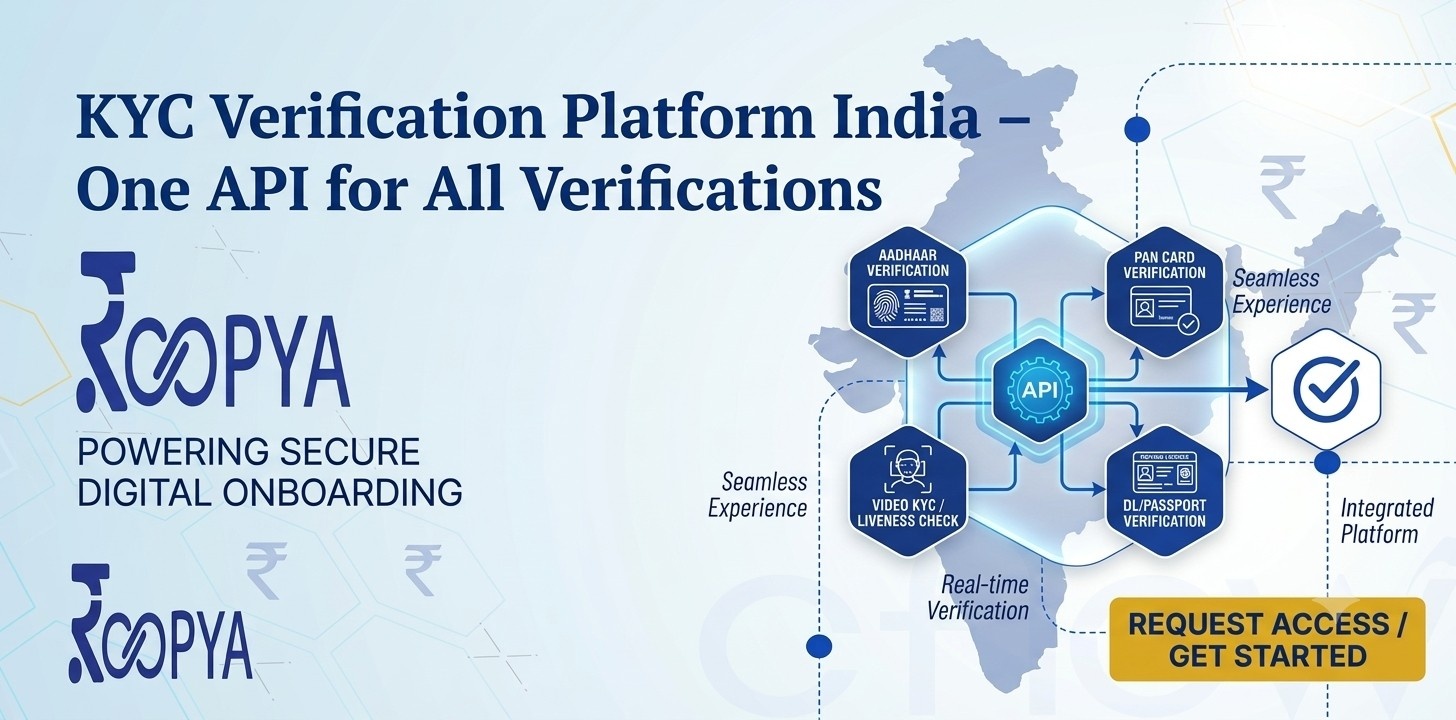
What is a KYC Verification Platform?
A KYC (Know Your Customer) verification platform is a technology solution that helps businesses verify the identity of their customers digitally using government-approved databases and verification systems.
Modern KYC platforms go beyond basic identity checks. They combine:
- Identity verification
- Fraud detection
- Document validation
- Risk assessment
- Compliance reporting
All into a unified system.
With platforms like Roopya, businesses can access 300+ pre-integrated APIs that simplify the entire onboarding process.
The Problem with Traditional KYC Systems
Before unified API platforms, lenders had to:
- Integrate multiple APIs (Aadhaar, PAN, CKYC, etc.)
- Manage separate vendor contracts
- Build custom workflows for each verification
- Handle fragmented data and reporting
- Spend 4–6 months on integrations
This resulted in:
❌ High costs
❌ Slow onboarding
❌ Increased drop-offs
❌ Compliance risks
One API for All Verifications – What Does It Mean?
A single API KYC platform allows you to perform multiple verification checks through one integration, instead of managing dozens of APIs.
With a unified solution, you can access:
Identity Verification APIs
- Aadhaar OTP eKYC
- Aadhaar XML / DigiLocker
- PAN verification
- PAN-Aadhaar linking
Compliance & Registry Checks
- CKYC lookup (CERSAI)
- PMLA / blacklist screening
Fraud Prevention APIs
- Face match & liveness detection
- Device intelligence
- Mobile number verification
- Deduplication checks
Financial & Risk APIs
- Credit bureau (CIBIL, Experian, CRIF, Equifax)
- Bank account verification
- Income & bank statement analysis
Instead of building each integration separately, everything is accessed via one standardized API response format.
How a Unified KYC API Works
A single API platform simplifies the workflow:
- Customer submits details
(Aadhaar, PAN, mobile number, selfie) - API triggers multiple verifications simultaneously
- Identity validation
- Fraud checks
- Database cross-verification
- System returns a unified response
- Pass / Fail / Review
- Risk score
- Verified customer data
- Decision engine processes results automatically
- Approve
- Reject
- Send for manual review
This reduces onboarding time from days to minutes.
Key Benefits of One API KYC Platform
1. Faster Customer Onboarding
Instant verification ensures users can complete onboarding in minutes instead of days.
2. Reduced Integration Time
Go live in 1–3 days instead of months with pre-integrated APIs.
3. Cost Optimization
A fully integrated KYC + fraud stack can cost ₹180–₹380 per application, but optimized sequencing reduces unnecessary API calls.
4. RBI & PMLA Compliance
Automated workflows ensure adherence to:
- RBI KYC guidelines
- CKYC requirements
- Data protection norms
5. Better Fraud Prevention
AI-driven fraud detection identifies:
- Fake identities
- Duplicate applications
- Suspicious devices
6. Centralized Data & Audit Trails
All verification logs are stored in one place, making audits seamless.
Why Fintechs Prefer Unified KYC APIs
From a business perspective, the biggest advantage is operational simplicity.
Many fintech teams highlight the importance of:
- One API integration
- One contract
- One support system
Instead of managing multiple vendors, everything runs through a single platform.
Features of an Advanced KYC Verification Platform
Platforms like Roopya offer:
- Pre-integrated verification ecosystem
- No-code workflow configuration
- AI-powered fraud detection
- Policy-based API sequencing
- Automatic fallback routing
- Consent management (DPDPA compliant)
- Real-time API monitoring
These features enable lenders to build fully automated, scalable onboarding journeys.
Use Cases Across Industries
NBFCs & Digital Lenders
- Loan origination
- Credit risk assessment
Fintech Apps
- User onboarding
- Wallet verification
Insurance Platforms
- Policy issuance verification
Marketplaces & Gig Platforms
- Vendor onboarding
- Identity verification
Future of KYC: API-First & Automated
The future of KYC is moving toward:
- API-first architecture
- Real-time verification
- AI-driven decision-making
- Minimal data collection (privacy-first KYC)
Instead of treating KYC as a compliance checkbox, businesses are using it as a strategic tool for risk management and growth.
A KYC Verification Platform with One API for All Verifications is no longer a luxury—it’s a necessity for modern digital businesses.
By eliminating complex integrations and unifying all verification processes, platforms like Roopya empower businesses to:
- Launch faster
- Reduce costs
- Improve customer experience
- Stay compliant
If you’re building or scaling a lending or fintech platform, adopting a unified KYC API approach is the smartest move toward efficient, secure, and scalable operations.

