How to Automate EMI Collection with NACH, DPD Triggers & Field Workflows

In India’s fast-growing digital lending ecosystem, collections have become the most critical function for NBFCs and fintech lenders. While loan disbursement can drive rapid portfolio growth, poor collection management can quickly increase NPAs, reduce cash flow, and damage profitability.
In 2026, manual collection processes are no longer sustainable.
Modern NBFCs are now adopting automated EMI collection systems powered by:
- NACH mandates
- UPI Autopay
- DPD-based workflows
- AI-driven reminders
- Field collection applications
- Recovery analytics
- Early warning systems
With RBI increasing focus on compliant recovery practices, lenders must modernize their collection infrastructure while improving borrower experience.
This guide explains how NBFCs can automate EMI collection using modern Loan Management Systems (LMS) like those offered by Roopya Money.
Start Free Trial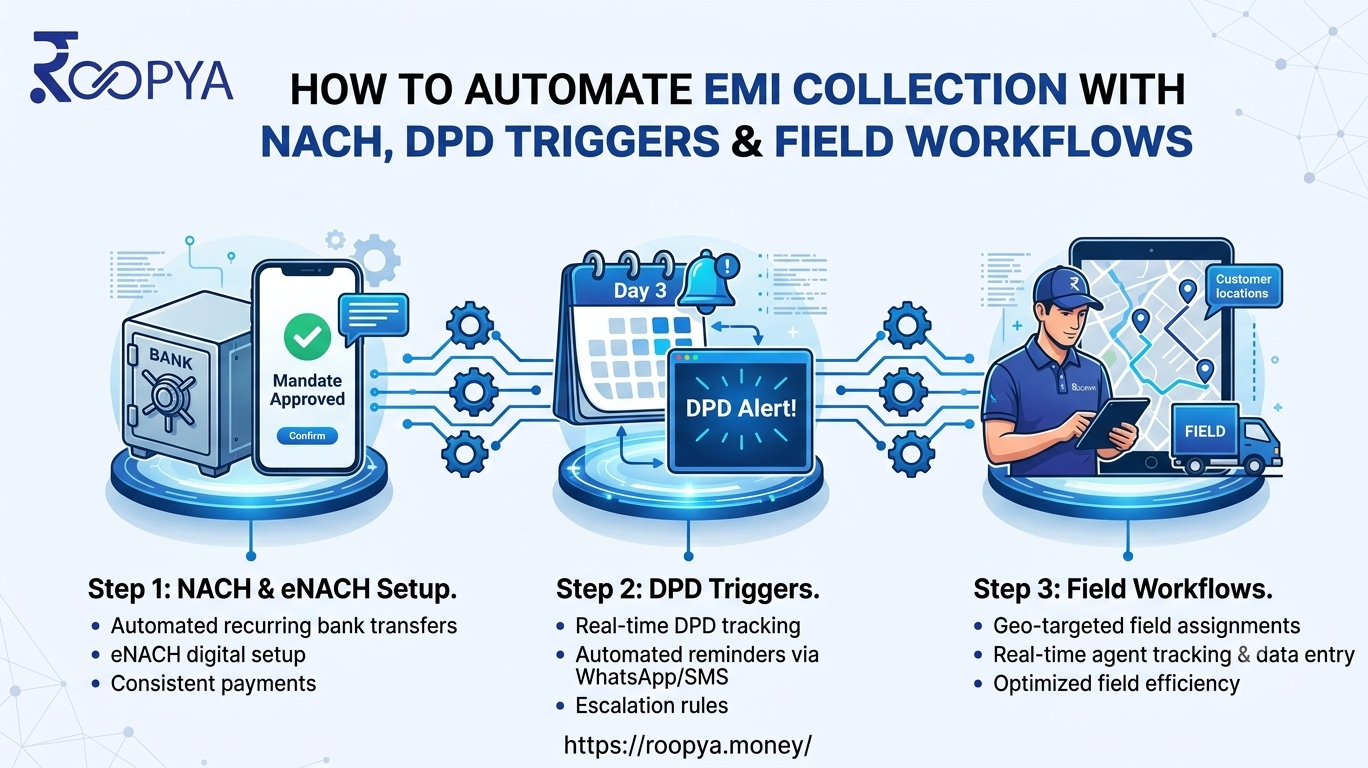
Why EMI Collection Automation Matters in 2026
India’s lending market is expanding rapidly across:
- Personal loans
- MSME loans
- BNPL
- Gold loans
- Vehicle loans
- Microfinance
- Embedded lending
As loan volumes increase, manual recovery processes become inefficient.
Without automation, lenders face problems such as:
- Missed repayments
- Delayed collection follow-ups
- Higher operational costs
- Rising DPD buckets
- Poor recovery visibility
- Compliance risks
- Customer dissatisfaction
Automated collection systems help lenders scale efficiently while reducing delinquency.
What Is EMI Collection Automation?
EMI collection automation refers to using software and payment infrastructure to automate the repayment lifecycle.
This includes:
- Auto-debit setup
- EMI reminders
- Payment tracking
- Bounce handling
- DPD monitoring
- Recovery assignment
- Field collection routing
- Settlement tracking
- Customer communication
A modern Loan Management System automates these workflows end-to-end.
Understanding NACH in Loan Collections
What Is NACH?
The National Payments Corporation of India developed the National Automated Clearing House (NACH) framework to automate recurring bank transactions.
NACH allows NBFCs to collect EMIs automatically from borrower bank accounts.
It is one of the most widely used repayment mechanisms in India.
How NACH Works
Step 1: Borrower Authorization
The borrower approves an eMandate during onboarding.
Step 2: Mandate Registration
The lender registers the mandate with the banking network.
Step 3: EMI Presentation
The system automatically presents EMI requests on due dates.
Step 4: Debit Processing
The bank debits the borrower account.
Step 5: Status Updates
The lender receives:
- Success reports
- Bounce reports
- Failure reasons
This entire process can be automated through a modern LMS.
Benefits of NACH Automation for NBFCs
Higher Collection Efficiency
Automated debits reduce missed payments.
Lower Operational Cost
Less manual follow-up is required.
Better Customer Experience
Borrowers avoid manual repayment steps.
Reduced Delinquency
Timely deductions improve repayment discipline.
Scalable Operations
Lenders can manage lakhs of EMI transactions daily.
What Are DPD Triggers?
DPD stands for Days Past Due.
It measures how many days a borrower has missed a scheduled payment.
For example:
| Status | Meaning |
| 0 DPD | Payment on time |
| 1–30 DPD | Early delinquency |
| 31–60 DPD | Medium risk |
| 61–90 DPD | High risk |
| 90+ DPD | Potential NPA |
DPD triggers automate actions based on delinquency stages.
Why DPD Automation Is Critical
Without automated DPD tracking, recovery teams cannot prioritize risk effectively.
Modern systems automatically trigger:
- SMS reminders
- WhatsApp alerts
- Call center tasks
- Field visits
- Escalations
- Legal workflows
based on borrower risk level.
Automated DPD Workflow Example
Before EMI Due Date
- Reminder SMS
- WhatsApp notification
- Payment link sharing
On Due Date
- NACH presentation
- UPI Autopay trigger
1 DPD
- Soft reminder
- Automated IVR call
5 DPD
- Collection agent assignment
15 DPD
- Escalation to senior recovery team
30+ DPD
- Field recovery workflow activation
60+ DPD
- Settlement negotiation process
This reduces manual intervention significantly.
Role of Loan Management Systems in EMI Automation
A modern Loan Management System acts as the central engine for collections.
Core Collection Features
NACH Management
Track mandates, status, retries, and failures.
UPI Autopay
Enable recurring digital repayments.
Bounce Handling
Automatically identify failed transactions.
DPD Classification
Categorize delinquent borrowers instantly.
Collection Allocation
Assign recovery agents automatically.
Field Collection App
Enable on-ground recovery tracking.
Payment Reconciliation
Match incoming payments in real-time.
UPI Autopay vs NACH
| Feature | NACH | UPI Autopay |
| Bank Account Based | Yes | Yes |
| Real-Time | Limited | Faster |
| Customer Experience | Traditional | Better |
| Setup Complexity | Moderate | Lower |
| Popularity | High | Rapidly growing |
| Mobile Friendly | Moderate | Excellent |
Most NBFCs now support both systems.
Field Collection Workflows Explained
Field collections remain important in:
- Microfinance
- Vehicle loans
- Gold loans
- Rural lending
- High-risk portfolios
Modern field collection systems digitize recovery operations.
Key Features of Field Collection Software
Geo-Tagged Visits
Track agent visit locations.
Mobile Collection App
Agents update recovery status instantly.
Digital Receipts
Borrowers receive instant payment confirmation.
Route Optimization
Reduce travel time for recovery teams.
Real-Time Escalation
Managers monitor field activity live.
Why Manual Collections Fail
Traditional collection processes face several issues:
- Spreadsheet dependency
- No real-time visibility
- Duplicate follow-ups
- Poor borrower communication
- Delayed escalations
- Compliance risks
Automation eliminates these inefficiencies.
RBI Compliance in EMI Collection
The Reserve Bank of India has strengthened recovery compliance norms for digital lenders.
NBFCs must ensure:
- Transparent borrower communication
- Ethical recovery practices
- Audit trails
- Consent-based communication
- Data protection
A compliant LMS helps automate these controls.
Collection Communication Automation
Modern systems automate borrower communication through:
| Channel | Use Case |
| SMS | EMI reminders |
| Payment links | |
| Statements | |
| IVR | Auto-calling |
| Push Notifications | App reminders |
This improves repayment rates significantly.
AI in EMI Collections
AI-powered collection systems now predict delinquency risks before default occurs.
AI-Based Capabilities
Risk Scoring
Identify likely defaulters early.
Collection Prioritization
Focus efforts on high-risk accounts.
Smart Communication Timing
Send reminders when borrowers are most responsive.
Behavioral Analysis
Track repayment patterns.
Early Warning Systems in Collections
An Early Warning System (EWS) identifies potential default signals such as:
- Reduced bank balance
- EMI bounce patterns
- Declining transaction activity
- Increased DPD trend
- Multiple missed calls
NBFCs use EWS to intervene before accounts become NPAs.
Recovery Workflow Automation
Modern systems automate:
- Agent allocation
- Bucket management
- Escalation rules
- Settlement approval
- Legal handover
This increases operational efficiency.
Collection Analytics That Matter
Important Metrics
| Metric | Purpose |
| Collection Efficiency Ratio | Recovery performance |
| Bounce Rate | Failed payment analysis |
| Roll Rate | Bucket movement |
| Resolution Time | Recovery speed |
| DPD Distribution | Portfolio health |
Real-time dashboards help management make faster decisions.
Challenges in EMI Collection Automation
Mandate Failures
Some borrowers lack sufficient bank balance.
Customer Resistance
Borrowers may disable mandates.
Multiple Bank Accounts
Tracking repayment sources becomes difficult.
Rural Connectivity Issues
Field collections remain necessary in some areas.
Despite these challenges, automation dramatically improves efficiency.
Best Practices for NBFC Collection Automation
Use Multiple Repayment Channels
Support:
- NACH
- UPI
- Debit cards
- Wallets
- QR payments
Automate Escalations
Never rely solely on manual follow-ups.
Track Every Borrower Interaction
Maintain audit logs for compliance.
Integrate Field Recovery
Digital and physical recovery must work together.
Monitor Portfolio Health Daily
Real-time analytics prevent rising NPAs.
How Embedded Finance Impacts Collections
Embedded lending increases collection complexity because loans originate inside:
- E-commerce apps
- B2B platforms
- Mobility apps
- SaaS platforms
An API-first LMS helps lenders manage repayment infrastructure efficiently.
Why Cloud-Based Collection Systems Are Growing
Cloud collection systems offer:
- Faster deployment
- Lower infrastructure cost
- Better scalability
- Easier API integrations
- Real-time monitoring
This is why most fintech lenders prefer cloud LMS platforms in 2026.
Key Features to Look for in Collection Software
Mandatory Features
- NACH automation
- UPI Autopay
- DPD workflows
- Recovery allocation
- Field collection app
- Real-time dashboards
- Compliance audit logs
- API integrations
- AI risk alerts
- Multi-channel communication
How Roopya Money Helps Automate Collections
Roopya Money provides advanced collection automation solutions for Indian NBFCs and fintech companies.
Core Solutions
Loan Management System
Automate repayment tracking and servicing.
Collection Management System
Improve recovery performance using DPD-based workflows.
Early Warning System
Detect risky borrowers early.
Lending Analytics
Monitor portfolio health in real-time.
API Integrations
Connect with banks, payment gateways, bureaus, and communication platforms.
Benefits of Using Roopya Money Collection Solutions
Faster Collections
Reduce manual follow-ups.
Lower Delinquency
Improve repayment discipline.
Reduced Operational Cost
Automate repetitive tasks.
Better Compliance
Maintain RBI-compliant workflows.
Higher Scalability
Handle growing loan portfolios efficiently.
Future of Collections in India
By 2026 and beyond, collections will become increasingly:
- AI-driven
- Predictive
- Automated
- API-powered
- Real-time
Lenders that fail to modernize collection infrastructure may struggle with rising NPAs and operational inefficiencies.
Final Thoughts
EMI collection automation is no longer optional for Indian NBFCs.
With increasing loan volumes and stricter RBI compliance requirements, lenders need:
- NACH automation
- DPD-based workflows
- AI-powered analytics
- Field collection integration
- Real-time dashboards
A modern Loan Management System enables NBFCs to:
- Improve collection efficiency
- Reduce NPAs
- Enhance borrower experience
- Scale operations sustainably
For NBFCs and fintech lenders looking to modernize collections, automation is the key to long-term profitability.
To explore advanced collection automation solutions, visit: Roopya Money

