Top 7 Loan Management System Features Every NBFC Must Have Before Scaling in 2026

India’s lending industry is evolving faster than ever before.
From digital-first NBFCs and embedded lending startups to MSME lenders and co-lending partnerships, the lending ecosystem in 2026 looks completely different from what it was just a few years ago.
Today’s borrowers expect:
- Instant approvals
- Digital onboarding
- Real-time loan tracking
- Seamless EMI repayment
- Mobile-first experiences
At the same time, NBFCs face increasing pressure from:
- RBI compliance requirements
- Rising operational costs
- Higher competition
- Fraud risks
- NPA management challenges
- Complex collection workflows
Start Free Trial
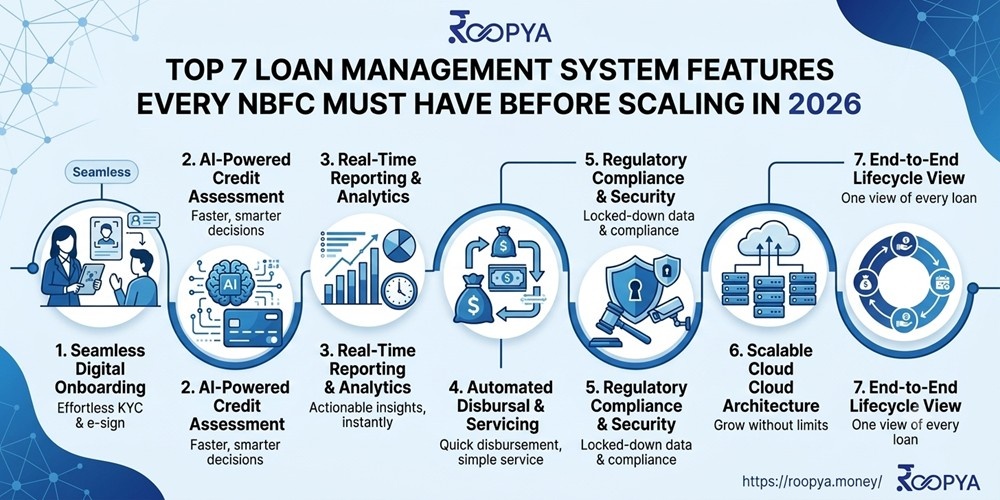
This is why modern lenders are investing heavily in scalable Loan Management Systems (LMS).
A basic loan servicing platform is no longer enough.
Before scaling operations in 2026, every NBFC must ensure its LMS supports:
- Automation
- Real-time analytics
- API integrations
- AI-powered workflows
- Digital collections
- RBI compliance
- Multi-product lending
According to industry analysis, Indian NBFCs are increasingly shifting toward cloud-native LMS platforms that combine LOS, collections, analytics, and compliance into a single ecosystem.
This guide explains the Top 7 LMS Features Every NBFC Must Have Before Scaling in 2026.
Why Choosing the Right LMS Matters in 2026
Scaling a lending business without the right technology stack creates major operational risk.
Many growing NBFCs still rely on:
- Excel sheets
- Manual reconciliation
- Legacy software
- Disconnected systems
As loan volumes increase, these outdated processes lead to:
- Delayed collections
- Higher NPAs
- Compliance failures
- Customer dissatisfaction
- Poor portfolio visibility
A modern Loan Management System becomes the operational backbone of the lending business.
It manages:
- EMI servicing
- Collections
- Repayment schedules
- DPD tracking
- Recovery workflows
- Accounting
- Compliance reporting
- Analytics
- Customer communication
Modern LMS platforms also support AI-driven automation and real-time integrations with India’s growing digital finance ecosystem.
What Is a Loan Management System (LMS)?
A Loan Management System is software that manages the post-disbursement lifecycle of a loan.
It helps lenders automate:
- Loan servicing
- Repayment collection
- Customer communication
- Delinquency management
- Recovery operations
- Reporting and compliance
Modern LMS platforms are cloud-based, API-first, and designed specifically for digital lending businesses.
Platforms like Roopya Money provide integrated:
- LMS
- LOS
- Collection management
- Early warning systems
- Lending analytics
- RBI-compliant workflows
for Indian NBFCs and fintech companies.
The Future of NBFC Lending Technology
The Indian lending market is moving rapidly toward:
- AI underwriting
- Embedded finance
- Co-lending
- Account Aggregator integration
- Real-time bureau reporting
- API-driven collections
- Predictive analytics
This means NBFCs need scalable lending infrastructure instead of traditional software systems.
Industry reports show strong growth in demand for integrated LMS + LOS platforms due to rising digital lending adoption and regulatory expectations.
Feature 1: Automated EMI Collection & Recovery Management
Collections are the heart of every lending business.
An NBFC can disburse thousands of loans, but without efficient collections, portfolio quality deteriorates quickly.
This is why automated collections are the most important LMS feature in 2026.
Why Manual Collections Fail
Manual collection systems create several problems:
- Missed follow-ups
- Delayed payment reminders
- Poor DPD visibility
- High recovery cost
- Compliance risks
As portfolios scale, manual recovery operations become unsustainable.
What a Modern Collection Engine Should Support
A scalable LMS must automate:
NACH Management
Automate recurring EMI debit workflows.
UPI Autopay
Enable mobile-first repayment experiences.
Payment Gateway Integration
Accept:
- Cards
- Net banking
- Wallets
- QR payments
DPD Tracking
Monitor delinquency in real time.
Automated Reminders
Send:
- SMS alerts
- WhatsApp reminders
- Email notifications
Recovery Workflow Allocation
Assign cases automatically to:
- Call center agents
- Field recovery teams
- Legal departments
Importance of DPD-Based Automation
DPD (Days Past Due) tracking helps lenders identify risk early.
Modern LMS platforms automatically trigger actions based on:
- 1 DPD
- 5 DPD
- 30 DPD
- 90+ DPD
This improves collection efficiency significantly.
Why This Feature Matters Before Scaling
Without automated collections:
- NPAs rise rapidly
- Recovery teams become inefficient
- Operational cost increases
- Cash flow suffers
A scalable LMS must manage lakhs of repayment transactions efficiently.
Feature 2: RBI Compliance & Audit-Ready Infrastructure
The Reserve Bank of India has significantly tightened digital lending regulations.
In 2026, compliance is no longer optional.
NBFCs must maintain:
- Audit trails
- Consent records
- Recovery governance
- Bureau reporting
- Data protection
- Transparent borrower communication
Key Compliance Features Every LMS Must Have
Audit Logs
Every borrower activity must be traceable.
Consent Management
Track borrower approvals digitally.
Data Encryption
Protect sensitive customer information.
Bureau Reporting
Automate credit bureau submissions.
Recovery Governance
Ensure compliant collection practices.
Regulatory Reporting
Generate RBI-ready reports automatically.
Risks of Weak Compliance Infrastructure
Without proper compliance systems, lenders face:
- Regulatory penalties
- Customer disputes
- Legal exposure
- Operational risk
A compliance-ready LMS reduces these risks significantly.
Why Compliance Automation Matters
Manual compliance tracking becomes impossible at scale.
An advanced LMS automates:
- Logs
- Reports
- Consent tracking
- Monitoring workflows
This is essential for growing NBFCs.
Feature 3: API-First Integration Ecosystem
Modern lending is powered by APIs.
Today’s NBFCs rely on multiple external systems for:
- KYC
- Credit checks
- GST verification
- Bank statement analysis
- Payments
- Fraud detection
A modern LMS must integrate seamlessly with India’s digital finance ecosystem.
Industry analysis highlights that API integration coverage is now one of the most critical criteria when evaluating LMS platforms in India.
Essential APIs Every LMS Should Support
| API Type | Purpose |
|---|---|
| CKYC APIs | Customer verification |
| Bureau APIs | Credit scoring |
| GST APIs | MSME underwriting |
| Account Aggregator APIs | Bank data access |
| eSign APIs | Digital agreements |
| Payment APIs | EMI collection |
| Video KYC APIs | Compliance onboarding |
| Fraud APIs | Risk monitoring |
Why API Flexibility Matters
Without integrations, lenders face:
- Delayed onboarding
- Manual verification
- Poor customer experience
- Operational inefficiency
Modern cloud LMS platforms now offer 300+ integrations for lenders.
Feature 4: AI-Powered Analytics & Risk Intelligence
AI is transforming lending operations in India.
Modern NBFCs use AI for:
- Credit scoring
- Fraud detection
- Collection prioritization
- Portfolio forecasting
- Delinquency prediction
An LMS without analytics capabilities will struggle in 2026.
Important AI Features in Modern LMS Platforms
Early Warning System (EWS)
Detect high-risk borrowers before default occurs.
Predictive DPD Analysis
Forecast delinquency trends.
Collection Prioritization
Focus recovery efforts on high-risk accounts.
Fraud Detection
Identify suspicious applications and transactions.
Portfolio Analytics
Track:
- NPA trends
- Geographic performance
- Product performance
- Recovery efficiency
Why AI Matters Before Scaling
As loan portfolios grow:
- Risk complexity increases
- Fraud exposure rises
- Collection challenges expand
AI-driven systems improve decision-making and reduce operational cost.
Feature 5: Co-Lending & Multi-Partner Lending Support
Co-lending is one of the biggest trends in Indian lending.
Banks and NBFCs increasingly collaborate to:
- Share risk
- Expand reach
- Improve capital efficiency
However, co-lending creates major operational complexity.
What a Co-Lending LMS Must Handle
Multi-Lender Accounting
Track lender participation accurately.
Revenue Sharing
Split interest and fees automatically.
EMI Split Logic
Allocate repayments correctly.
Partner Reporting
Generate institution-specific MIS reports.
Compliance Tracking
Maintain audit-ready workflows.
Reddit discussions among Indian fintech professionals highlight that native co-lending support is now one of the biggest differentiators between modern LMS platforms.
Why Co-Lending Support Matters
NBFCs planning aggressive growth increasingly rely on:
- Bank partnerships
- Embedded finance
- Marketplace lending
A scalable LMS must support these ecosystems.
Feature 6: No-Code Product Configuration
Traditional lending software requires developers for every change.
This creates:
- Slow product launches
- High IT dependency
- Delayed innovation
In 2026, no-code LMS platforms are becoming essential.
What No-Code LMS Means
Business teams can configure:
- Loan products
- Interest rates
- Repayment schedules
- Eligibility rules
- DPD logic
- Collection workflows
without developer support.
Benefits of No-Code Lending Infrastructure
Faster Product Launch
Launch products in days instead of months.
Lower IT Cost
Reduce developer dependency.
Better Agility
Adapt quickly to market demand.
Faster Compliance Updates
Respond quickly to RBI changes.
Industry comparisons show that no-code platforms significantly reduce deployment time and operational complexity for Indian lenders.
Feature 7: Cloud-Native Scalability & Real-Time Performance
Cloud infrastructure is now the default choice for modern NBFCs.
Traditional on-premise systems struggle with:
- Scalability
- Remote accessibility
- API integrations
- Real-time processing
Why Cloud LMS Is Dominating in 2026
Faster Deployment
Go live quickly.
Lower Infrastructure Cost
Reduce server and maintenance expenses.
Easier Scalability
Support rapid portfolio growth.
Better Disaster Recovery
Improve operational resilience.
Real-Time Accessibility
Enable remote operations securely.
Industry reports show strong growth in cloud-based LMS adoption among Indian NBFCs because of lower cost and faster scalability.
Additional Features That Matter in 2026
Beyond the top 7 features, lenders should also evaluate:
Borrower Self-Service Portal
Allow customers to:
- Download statements
- Pay EMIs
- Raise support requests
Mobile Collection App
Enable field recovery operations digitally.
Multi-Product Lending
Support:
- MSME loans
- Gold loans
- BNPL
- Personal loans
- Vehicle loans
Embedded Lending Support
Enable API-based partner lending.
Signs Your Current LMS Cannot Scale
Your LMS may need replacement if:
- Collections are manual
- Reporting takes days
- APIs are limited
- Product launches are slow
- Recovery tracking is weak
- Co-lending is unsupported
- Compliance workflows are manual
These limitations create major scaling bottlenecks.
How Roopya Money Helps NBFCs Scale in 2026
Roopya Money provides advanced digital lending infrastructure for Indian NBFCs and fintech lenders.
Core Solutions
Loan Management System
Automate:
- Servicing
- Collections
- DPD management
- Repayment tracking
Loan Origination System
Digitize:
- Onboarding
- KYC
- Underwriting
- Disbursement
Collection Management System
Improve recovery efficiency using:
- DPD workflows
- Field recovery
- AI prioritization
Early Warning System
Predict potential NPAs early.
Lending Analytics
Gain portfolio-level visibility using real-time dashboards.
300+ API Integrations
Connect seamlessly with:
- Bureau APIs
- Payment gateways
- Account Aggregator
- GST systems
- CKYC
- eSign providers
Roopya’s no-code lending infrastructure and cloud-native architecture are designed specifically for India’s rapidly evolving NBFC ecosystem.
Future of Loan Management Systems in India
The next generation of LMS platforms will focus heavily on:
- AI automation
- Embedded finance
- Real-time underwriting
- Predictive collections
- API ecosystems
- Hyper-personalized lending
NBFCs that continue relying on legacy systems may struggle to compete.
Final Thoughts
Scaling an NBFC in 2026 requires much more than loan disbursement capability.
Modern lenders need Loan Management Systems that support:
- Automated collections
- RBI compliance
- AI-driven analytics
- API integrations
- Co-lending
- No-code configuration
- Cloud scalability
The right LMS helps NBFCs:
- Reduce operational cost
- Improve collections
- Minimize fraud
- Stay compliant
- Launch products faster
- Scale efficiently
As India’s lending ecosystem becomes increasingly digital and competitive, investing in a scalable LMS is no longer optional — it is a strategic necessity.
To explore modern lending infrastructure for your NBFC or fintech company, visit:Roopya Money

