Loan Management System: Complete Guide for Banks, NBFCs & Fintech Companies in India (2026)

Modern Loan Management Software improves operational efficiency, reduces manual work, minimizes repayment errors, and enhances borrower experience through automated workflows and real-time monitoring.
An LMS enables lenders to manage thousands of active loans efficiently while ensuring RBI compliance, data security, and seamless repayment processing.
Start Free Trial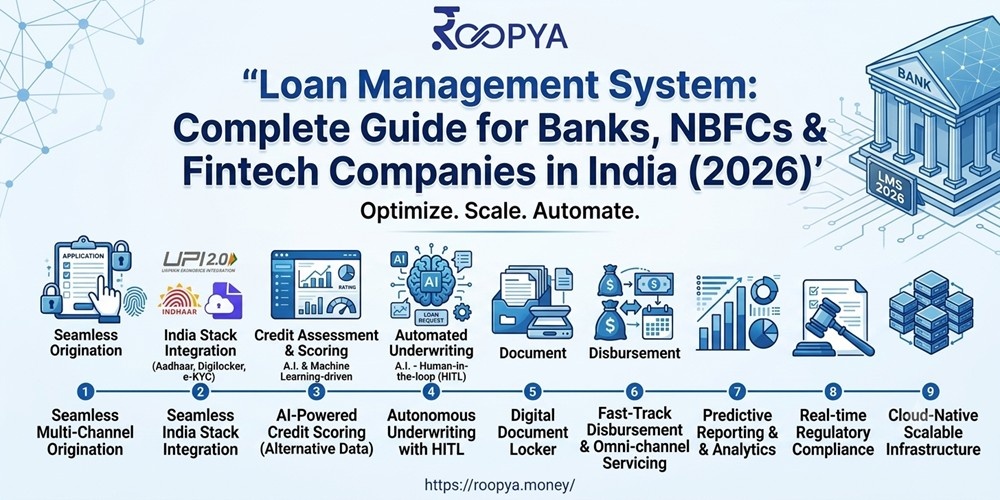
What is a Loan Management System?
A Loan Management System (LMS) is a digital software platform that helps banks, NBFCs, fintech companies, and microfinance institutions manage the complete post-disbursement loan lifecycle. It automates loan servicing operations such as EMI tracking, repayment collection, interest calculation, overdue management, penalties, collections, customer communication, and loan closure.
How Does a Loan Management System Wor?
A Loan Management System automates all loan servicing activities after loan disbursement.
Step-by-Step Loan Management Process
- Loan account creation after approval
- EMI schedule generation
- Automated repayment reminders
- Payment collection through multiple channels
- Interest and penalty calculation
- Overdue and delinquency tracking
- Collection workflow automation
- Customer account management
- Loan closure and reporting
The system centralizes all loan servicing operations in a single dashboard.
Key Features of Loan Management Software
Automated EMI Management
Generate and manage repayment schedules automatically for different loan products.
Repayment Tracking
Monitor borrower repayments in real time across multiple payment channels.
Collection Management
Automate collection workflows for overdue and delinquent accounts.
Interest & Penalty Calculation
Automatically calculate interest, penalties, late fees, and outstanding balances.
Multi-Loan Product Support
Manage personal loans, business loans, gold loans, vehicle loans, MSME loans, and more.
Customer Communication Automation
Send SMS, email, WhatsApp, and payment reminders automatically.
Real-Time Reporting & Analytics
Track portfolio performance, repayment trends, NPA risks, and collection efficiency.
API Integrations
Integrate with payment gateways, accounting software, CRMs, and banking systems.
RBI Compliance Management
Maintain audit trails, borrower records, and regulatory reporting requirements.
Benefits of Loan Management System
Faster Loan Servicing
Automate repetitive servicing tasks and reduce manual operations.
Improved Repayment Collection
Increase collection efficiency with automated reminders and payment tracking.
Better Customer Experience
Provide borrowers with transparent repayment schedules and digital payment options.
Reduced Operational Costs
Minimize paperwork, manual errors, and administrative workload.
Real-Time Loan Monitoring
Track loan performance, defaults, overdue accounts, and collections instantly.
Scalable Lending Operations
Manage large loan portfolios without increasing operational manpower.
Why Banks & NBFCs Need Loan Management Software
Banks and NBFCs handle thousands of active loans simultaneously. Manual servicing processes can lead to:
- Repayment errors
- Delayed collections
- Compliance risks
- Poor customer experience
- Operational inefficiencies
A modern Loan Management System helps lenders automate servicing operations, improve repayment performance, and reduce NPAs.
Types of Loans Managed Through LMS
A Loan Management System can manage multiple lending products, including:
- Personal Loans
- Gold Loans
- Business Loans
- MSME Loans
- Vehicle Loans
- Education Loans
- Consumer Durable Loans
- Mortgage Loans
- Payday Loans
- Group Loans
Loan Management System vs Loan Origination System
| Feature | Loan Management System (LMS) | Loan Origination System (LOS) |
|---|---|---|
| Main Purpose | Post-disbursement servicing | Pre-disbursement processing |
| Covers | EMI tracking and collections | Application and approval |
| Used For | Repayment management | Loan onboarding |
| Workflow | Active loan servicing | Underwriting and approval |
Both systems work together to provide end-to-end digital lending automation.
Essential Integrations in Loan Management Software
Modern LMS platforms support integrations with:
- Payment Gateways
- UPI & NACH Systems
- Accounting Software
- CRM Platforms
- Collection Tools
- SMS & WhatsApp APIs
- Credit Bureau APIs
- eSign Platforms
- Banking APIs
These integrations improve operational efficiency and borrower engagement.
How LMS Helps Reduce NPAs
A Loan Management System helps reduce non-performing assets (NPAs) by:
- Sending automated repayment reminders
- Tracking overdue accounts instantly
- Automating collection escalation workflows
- Identifying high-risk borrowers early
- Monitoring repayment behavior in real time
This helps lenders improve portfolio quality and reduce financial risk.
RBI Compliance & Security in Loan Management Systems
Modern LMS platforms support RBI regulations through:
- Audit trail management
- Secure borrower data storage
- Role-based access controls
- Consent-based communication
- Automated compliance reporting
- Data encryption and security monitoring
Compliance automation is essential for banks, NBFCs, and fintech companies operating in India.
Future of Loan Management Systems in India
The future of Loan Management Software is driven by:
- AI-powered collections
- Predictive repayment analytics
- Embedded finance
- Digital payment automation
- Account Aggregator integration
- Real-time borrower engagement
- Machine learning risk monitoring
Advanced LMS platforms are helping lenders build faster, smarter, and more efficient digital lending ecosystems.
Why Choose Roopya Loan Management System?
Roopya offers an advanced Loan Management System designed for banks, NBFCs, fintech companies, and microfinance institutions.
Key Benefits of Roopya LMS
- Automated EMI tracking
- Smart collection management
- Multi-loan product support
- RBI-compliant workflows
- API-first architecture
- Real-time analytics dashboard
- Secure cloud infrastructure
- Seamless third-party integrations
Roopya helps lenders streamline loan servicing operations, improve collections, and scale digital lending efficiently.
A Loan Management System is essential for modern financial institutions looking to automate loan servicing, improve repayment collection, reduce operational costs, and enhance customer experience.
As digital lending continues to grow in India, banks, NBFCs, and fintech companies need advanced LMS platforms to manage loan portfolios efficiently, reduce risk, and scale lending operations successfully.

