Loan Management Software for Small Lending Businesses

The Complete Guide to Scaling Lending Operations
The lending industry has evolved dramatically over the last decade. Small lending businesses, NBFCs, fintech startups, microfinance institutions, cooperative lenders, and digital lending companies are under constant pressure to process loans faster, reduce operational costs, improve collections, and remain compliant with changing regulations.
Start Free Trial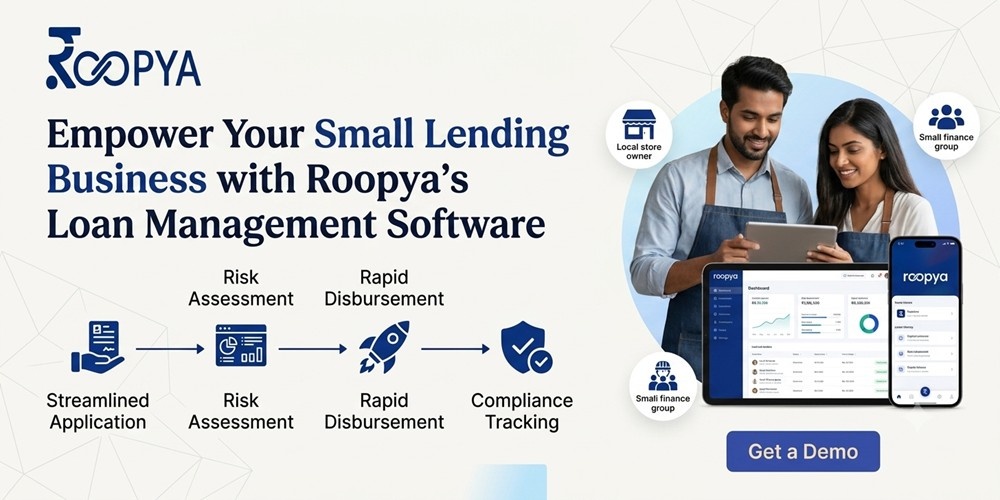
Many small lenders still rely on spreadsheets, manual calculations, paper documentation, and disconnected systems. While these methods may work during the initial stages of business, they quickly become inefficient as loan volumes increase.
This is where Loan Management Software (LMS) becomes a game changer.
Modern loan management software automates the entire loan lifecycle—from borrower onboarding and loan disbursement to repayment tracking, collections, reporting, and portfolio monitoring. Advanced platforms now offer AI-driven automation, cloud-based accessibility, real-time analytics, automated EMI collections, and compliance management. Modern lending platforms increasingly combine loan origination, servicing, collections, and analytics into a unified system, helping lenders scale faster and reduce operational complexity.
In this comprehensive guide, you’ll learn:
- What loan management software is
- Why small lenders need it
- Key features to look for
- Benefits for lending businesses
- How automation improves collections
- AI-powered lending management
- Best practices for implementation
- Future trends in lending technology
What is Loan Management Software?
Loan Management Software is a digital platform designed to automate and manage the complete loan servicing process after a loan application has been approved.
It centralizes borrower data, repayment schedules, EMI tracking, collections, loan servicing, reporting, and compliance into a single system.
Instead of manually maintaining borrower records and repayment schedules, lenders can manage thousands of loans from a single dashboard.
A modern LMS typically handles:
- Borrower management
- Loan account creation
- EMI scheduling
- Repayment tracking
- Interest calculation
- Collections management
- Penalty processing
- Loan servicing
- Portfolio monitoring
- Regulatory reporting
- Analytics and dashboards
Loan management platforms are increasingly cloud-based, enabling lenders to access real-time data, automate workflows, and improve operational efficiency.
Why Small Lending Businesses Need Loan Management Software
1. Eliminate Manual Errors
Manual loan tracking often leads to:
- EMI calculation mistakes
- Incorrect interest computation
- Missing repayments
- Data duplication
- Collection inefficiencies
Automation significantly reduces human errors and improves accuracy.
2. Faster Loan Servicing
Customers today expect instant service.
A loan management platform enables:
- Automated repayment schedules
- Instant account updates
- Real-time balance checks
- Automated notifications
This improves borrower satisfaction while reducing workload.
3. Better Portfolio Visibility
Without software, lenders struggle to answer:
- Which loans are overdue?
- Which customers are likely to default?
- What is the current portfolio health?
- Which branch performs best?
A centralized dashboard provides immediate answers.
4. Improved Collections
Collections determine profitability.
Automated collection workflows help lenders:
- Send EMI reminders
- Trigger overdue alerts
- Track delinquent accounts
- Manage recovery teams
- Monitor DPD (Days Past Due)
Many lenders identify automated collections and repayment monitoring as key requirements for operational efficiency and portfolio performance.
5. Regulatory Compliance
Compliance is becoming increasingly important in India’s lending ecosystem.
Software helps maintain:
- Audit trails
- KYC records
- Customer consent logs
- Document storage
- RBI compliance reports
Key Challenges Faced by Small Lending Businesses
Before implementing software, many lenders face:
Disorganized Customer Records
Customer information often exists across multiple spreadsheets and files.
Collection Delays
Manual follow-ups consume significant staff time.
Poor Visibility
Management lacks real-time portfolio insights.
Higher Operational Costs
More employees are required to handle routine tasks.
Increased Risk
Manual processes increase fraud and default risks.
These issues become more severe as loan volumes increase.
Core Features of Loan Management Software
Borrower Management
Centralized borrower profiles include:
- Personal details
- KYC documents
- Loan history
- Credit information
- Communication records
This creates a complete customer view.
Loan Account Management
Manage:
- Personal loans
- Business loans
- Gold loans
- Vehicle loans
- Education loans
- Microfinance loans
From a single platform.
Automated EMI Calculation
The system automatically calculates:
- Principal amount
- Interest
- EMI schedules
- Due dates
- Outstanding balances
Eliminating calculation errors.
Repayment Tracking
Track:
- Paid EMIs
- Pending EMIs
- Partial payments
- Foreclosures
- Prepayments
In real time.
Collection Management
Advanced collection modules provide:
- Automated reminders
- Collection workflows
- Recovery tracking
- DPD monitoring
- Agent management
This improves repayment rates significantly.
Loan Servicing
Post-disbursement activities include:
- Statement generation
- Account servicing
- Customer support
- Interest recalculation
- Restructuring support
Modern LMS platforms integrate these functions within a single servicing environment.
AI-Powered Loan Management Software
Artificial Intelligence is transforming lending operations.
AI can help lenders:
Predict Defaults
Identify high-risk borrowers before default occurs.
Improve Collections
Prioritize collection efforts based on repayment probability.
Fraud Detection
Detect suspicious patterns automatically.
Smart Credit Scoring
Analyze alternative data for underwriting decisions.
Portfolio Analytics
Generate predictive insights.
AI-powered lending and risk assessment capabilities are becoming a major differentiator in modern lending platforms.
Cloud-Based Loan Management Software
Cloud technology has revolutionized lending.
Benefits include:
Remote Accessibility
Access data from anywhere.
Lower Infrastructure Costs
No expensive servers required.
Automatic Updates
Always stay current.
Data Backup
Secure cloud storage protects records.
Scalability
Grow without replacing software.
Cloud-native lending platforms are increasingly preferred because they support faster deployment, integration, and scalability.
Benefits of Loan Management Software for Small Lenders
Increased Productivity
Automation reduces repetitive tasks.
Faster Processing
Loan servicing becomes significantly faster.
Better Customer Experience
Borrowers receive timely updates and self-service options.
Reduced Costs
Fewer manual operations.
Improved Compliance
Regulatory requirements become easier to manage.
Stronger Collections
Automated follow-ups improve recovery rates.
Better Decision-Making
Real-time reports support strategic planning.
How Loan Management Software Improves Collections
Collections are often the biggest challenge for small lenders.
Software improves collections through:
Automated SMS Reminders
Notify borrowers before due dates.
Email Notifications
Reduce missed payments.
WhatsApp Alerts
Improve customer engagement.
Auto-Debit Integration
Collect payments automatically.
Collection Dashboards
Track overdue accounts instantly.
Recovery Workflows
Automate escalation processes.
Many lenders prioritize automated repayment tracking, reminders, and collection management because these features directly affect portfolio performance.
Types of Lending Businesses That Need LMS
NBFCs
Manage large portfolios efficiently.
Fintech Companies
Enable fully digital lending.
Microfinance Institutions
Support field collections and group lending.
Gold Loan Companies
Track collateralized loans.
Cooperative Societies
Manage member lending activities.
Consumer Finance Companies
Handle retail lending at scale.
SME Lenders
Support business financing operations.
Loan Management Software vs Spreadsheet Management
| Feature | Spreadsheet | Loan Management Software |
|---|---|---|
| Automation | No | Yes |
| EMI Tracking | Manual | Automated |
| Collections | Manual | Automated |
| Reporting | Limited | Advanced |
| Compliance | Difficult | Simplified |
| Scalability | Poor | Excellent |
| Security | Low | High |
| Real-Time Monitoring | No | Yes |
Essential Integrations for Modern LMS
A modern platform should integrate with:
Payment Gateways
- Razorpay
- PayU
- Cashfree
Banking Systems
- Account verification
- Disbursement APIs
Credit Bureaus
- CIBIL
- Experian
- CRIF
- Equifax
KYC Providers
- Aadhaar verification
- PAN verification
Communication Platforms
- SMS gateways
- Email services
- WhatsApp APIs
Modern lending systems increasingly support API-first integrations to streamline lending workflows.
Security Features Every Lender Should Demand
Security is critical.
Look for:
- End-to-end encryption
- Role-based access
- Multi-factor authentication
- Audit logs
- Data backups
- Secure APIs
- Compliance controls
Implementation Guide for Small Lending Businesses
Step 1: Assess Current Operations
Evaluate:
- Loan volume
- Collection process
- Customer management
- Reporting requirements
Step 2: Define Objectives
Set goals such as:
- Faster collections
- Reduced costs
- Better compliance
- Improved borrower experience
Step 3: Select the Right LMS
Choose software that offers:
- Scalability
- Cloud deployment
- Automation
- API integrations
- AI capabilities
Step 4: Migrate Data
Import:
- Borrowers
- Loan accounts
- Payment history
- Documents
Step 5: Train Staff
Ensure employees understand workflows.
Step 6: Monitor Performance
Track:
- Collection efficiency
- Portfolio quality
- Customer satisfaction
- Operational savings
Future of Loan Management Software
The next generation of LMS platforms will include:
AI-Powered Collections
Automated collection recommendations.
Predictive Risk Analytics
Earlier default prediction.
Embedded Finance
Lending integrated into other platforms.
Hyper Automation
Minimal manual intervention.
Open Banking Integrations
Faster verification and underwriting.
Real-Time Decision Engines
Instant approvals and servicing.
Industry discussions increasingly emphasize no-code configuration, automation, AI, and India-specific lending requirements as important selection criteria for modern LMS platforms.
Why Roopya is the Ideal Loan Management Software for Small Lending Businesses
According to Roopya’s platform information, the solution provides:
- End-to-end loan lifecycle management
- AI-powered lending automation
- Cloud-native deployment
- Automated EMI management
- Collection management
- Loan servicing
- Portfolio analytics
- Multi-product lending support
- API integrations
- Compliance-ready workflows
Roopya is designed for NBFCs, fintechs, microfinance institutions, digital lenders, and growing lending businesses looking to automate operations and scale efficiently.
The lending industry is moving rapidly toward automation, digital servicing, and AI-driven decision-making.
For small lending businesses, relying on spreadsheets and manual processes is no longer sustainable.
Loan Management Software enables lenders to:
- Automate operations
- Improve collections
- Reduce costs
- Enhance customer experience
- Strengthen compliance
- Scale efficiently
Whether you’re an NBFC, fintech startup, microfinance institution, or digital lender, implementing a modern loan management platform can transform your lending business and create a strong foundation for future growth.

